16 Stadiums, 3 Countries: The 2026 World Cup Map
Winning Score Team Published Tue 16 Jun Updated Tue 16 Jun
For every previous World Cup, the word “host” meant one country.
In 2026 it doesn’t anymore.
This is the first World Cup with three host nations — the USA, Canada and Mexico — spread across 16 cities and 16 stadiums, from the Pacific coast to the Atlantic, staging 104 matches between 11 June and 19 July 2026 (FIFA).
This is not a tournament you can drive across in a day. It is the widest map in World Cup history.
The short version (20 seconds)
- 16 stadiums, 16 cities, 3 nations — 11 in the USA, 3 in Mexico, 2 in Canada
- Opening match at Estadio Azteca, Mexico City (11 June); final at MetLife, New York/New Jersey (19 July)
- Biggest venue is Azteca at 80,824; smallest is Toronto at 43,036
- Longest gap between two venues is 4,491 km (Vancouver to Miami), across four time zones
- For fans watching in Thailand, most games fall between late evening and the following midday
- (Match allocations as of June 2026 — subject to change before the tournament)
All 16 venues in one place
The capacities FIFA confirmed on 10 June 2026 often run lower than a stadium’s normal limit, because seats are removed for media, hospitality and security buffers (FIFA).
| City | Stadium (tournament name) | Country | Time zone | Matches | Capacity (FIFA) |
|---|---|---|---|---|---|
| Mexico City | Azteca | Mexico | UTC-6 | 5 (incl. opener) | 80,824 |
| New York/New Jersey | MetLife | USA | UTC-4 | 8 (incl. final) | 80,663 |
| Dallas | AT&T | USA | UTC-5 | 9 (incl. semi-final) | 70,649 |
| Los Angeles | SoFi | USA | UTC-7 | 8 (incl. quarter-final) | 70,492 |
| Kansas City | Arrowhead | USA | UTC-5 | 6 | 69,045 |
| San Francisco Bay Area | Levi’s | USA | UTC-7 | 6 | 68,827 |
| Houston | NRG | USA | UTC-5 | 7 | 68,777 |
| Atlanta | Mercedes-Benz | USA | UTC-4 | 8 (incl. semi-final) | 68,239 |
| Philadelphia | Lincoln Financial | USA | UTC-4 | 6 | 68,324 |
| Seattle | Lumen | USA | UTC-7 | 6 | 66,925 |
| Miami | Hard Rock | USA | UTC-4 | 7 (incl. third place) | 64,478 |
| Boston | Gillette | USA | UTC-4 | 7 | 64,146 |
| Vancouver | BC Place | Canada | UTC-7 | 7 | 52,497 |
| Monterrey | BBVA | Mexico | UTC-6 | 4 | 51,243 |
| Guadalajara | Akron | Mexico | UTC-6 | 4 | 45,664 |
| Toronto | BMO Field | Canada | UTC-4 | 6 | 43,036 |
The table tells a story on its own — the USA carries 11 cities as the backbone and hosts the heavyweight rounds, while Mexico and Canada take the historic and ceremonial roles, opening the tournament and adding two new corners to the map.
The venues to know first
The tournament opens at Estadio Azteca in Mexico City on 11 June 2026 and closes at MetLife Stadium in New York/New Jersey on 19 July (FIFA).
Azteca is not just the largest venue at 80,824. It is the first stadium in history to host three men’s World Cups — 1970, 1986 and 2026. This is where Pelé lifted the trophy in 1970 and Maradona scored the “Hand of God” in 1986. It sits at 2,200 metres above sea level, thin air that has punished visiting lungs for generations (Wikipedia).
That capacity gap is part of the charm of this edition. A team might play a group game in front of a tight, roaring 43,000 in Toronto, then fly across the continent to face a wall of 80,000 at Azteca days later. Two different worlds.
Roofs, air conditioning and the North American summer
June and July are high summer in North America, and some cities run hot enough to design around it.
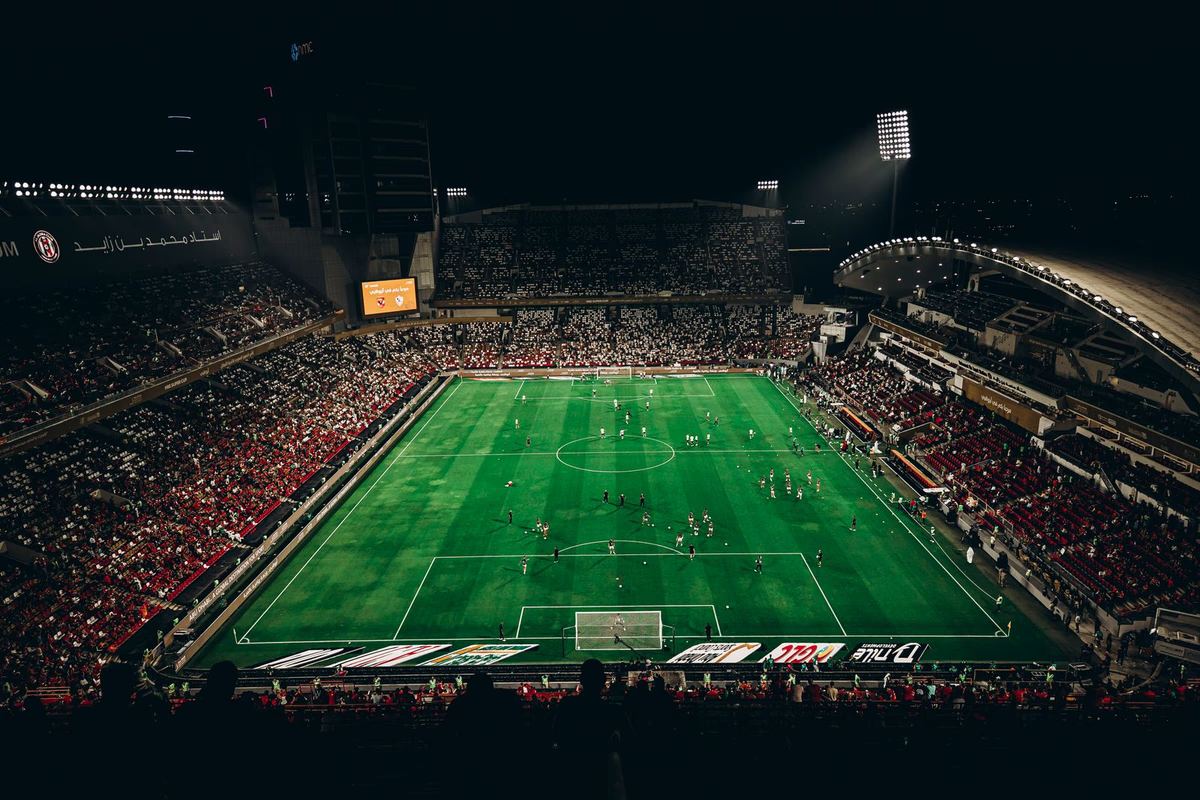
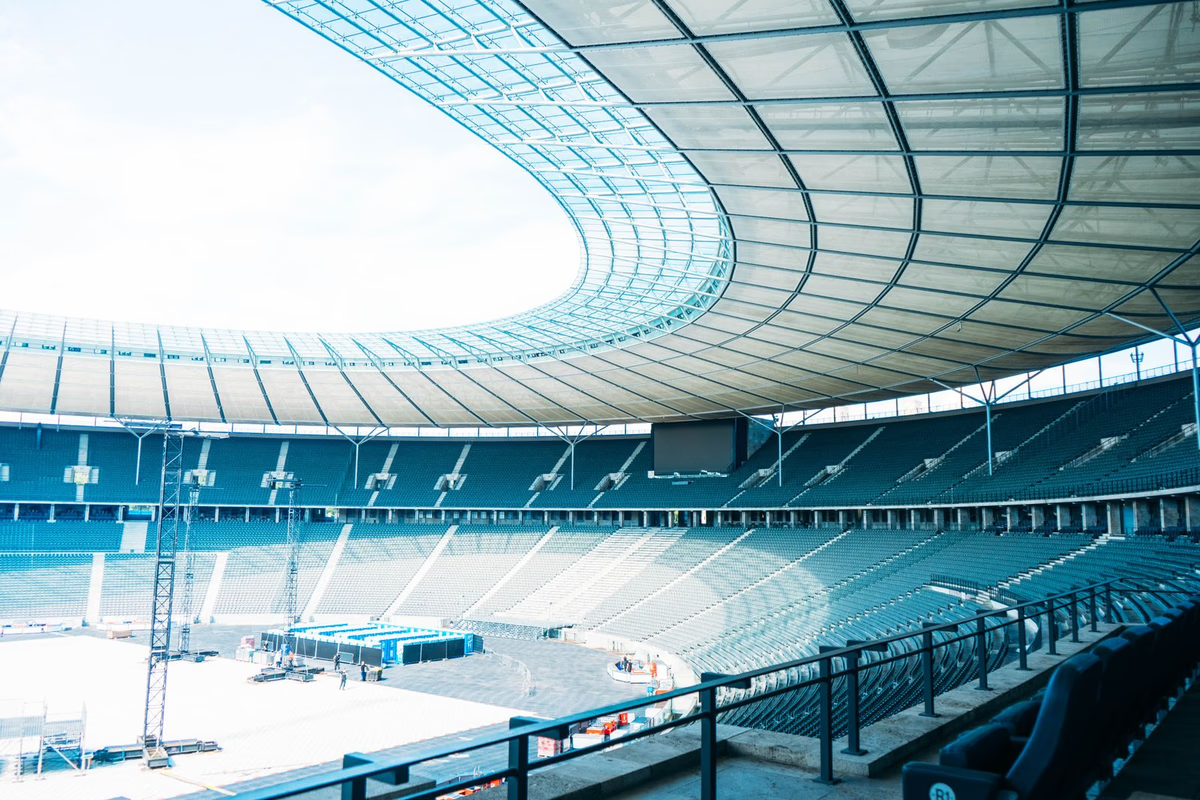
The fully enclosed, air-conditioned venues are AT&T (Dallas), NRG (Houston) and Mercedes-Benz (Atlanta). Vancouver’s BC Place has a retractable roof, and SoFi in Los Angeles sits under a translucent canopy that shades fans while open sides let the coastal breeze through.
Roofs neutralise Texas-style heat and humidity entirely, but they created a new problem for FIFA’s pitch scientists — five years of research went into hybrid turf that can thrive in enclosed stadiums where sunlight is scarce and air conditioning disrupts the moisture in the air (FIFA).
To protect players in every venue, open-air or not, FIFA has mandated a three-minute hydration break 22 minutes into each half of every match, regardless of the weather.
Distances, time zones and city clusters
A map this wide means long flights. The longest gap between two venues is 4,491 kilometres, between Vancouver and Miami — across four time zones from UTC-4 to UTC-7. Teams crossing zones like that within days face both jet lag and wildly different climates.
But for fans chasing several matches, there are clusters close enough to travel between:
- Northeast corridor — Boston, New York/New Jersey, Philadelphia, Toronto, linked by rail (New York to Philadelphia is just 137 km)
- Texas + northern Mexico — Dallas, Houston, Monterrey
- Pacific Northwest — Vancouver and Seattle, only 195 km apart, running down to San Francisco and Los Angeles
Base yourself in one cluster and you can see several games without boarding another plane.
The Mexico time-zone trap most people miss
Here is the most counterintuitive fact, and one anyone planning a cross-border trip needs to know — Mexico abolished Daylight Saving Time in late 2022 (Time and Date).
So in summer 2026 the three Mexican host cities — Mexico City, Guadalajara, Monterrey — stay on UTC-6 all tournament, while their northern neighbours in Texas (Dallas, Houston) shift to UTC-5.
That means a match in Monterrey is an hour “behind” one in Houston directly to the north — the opposite of what geography suggests. Anyone booking two cross-border games on the same day should double-check this.
For fans in Thailand: football all day
Good news for anyone watching from Thailand — North America’s wide spread of time zones puts most kickoffs in comfortable viewing windows, not the dead of night.
Against Bangkok time (UTC+7):
- Eastern Time (UTC-4): a noon kickoff in New York is 23:00 the same night in Thailand; a 6 PM game is 05:00 the next morning
- Central Time (UTC-5): a 2 PM match in Dallas is 02:00 the next day; an 8 PM game is 08:00 the following morning
- Pacific Time (UTC-7): a 7 PM match in LA broadcasts at 09:00 the next morning in Bangkok; a 10 PM game lands at noon
In other words, a single World Cup day gives Thai fans live football from 11 PM straight through to midday — a rolling festival without leaving home.
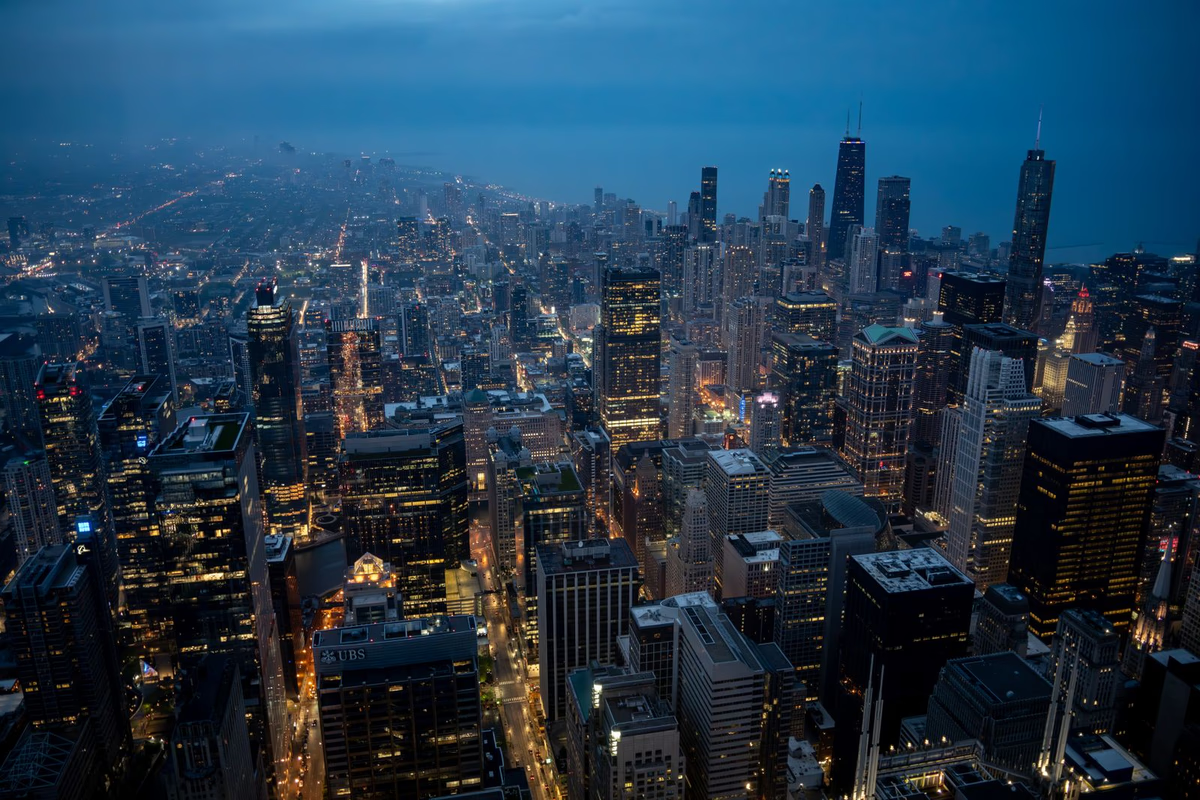
For anyone actually flying out, San Francisco is the easiest western venue to reach from Bangkok, while New York suits multi-match trips — base there and the rail network reaches Philadelphia and Boston with ease.
Plan first, then enjoy the ride
The 2026 World Cup is not a tournament you can switch on and watch at random like before. Sixteen stadiums across three nations and four time zones mean kickoff times vary enormously. Knowing who plays where, and when, is the edge that keeps you from missing the matches that matter.
- Check where your team plays and the kickoff in Thai time on the full match schedule
- See all the groups at the group standings and the knockout path on the bracket
- Read on about travel and stays in the travel guide for Thai fans, full broadcast times in the Thai-time schedule guide, and host history in past World Cup host nations
The stadiums are ready. Plan well, and every morning there will be a World Cup waiting.
Sources
- FIFA confirms final stadium capacities — set to break attendance record — FIFA, 2026
- Updated 2026 World Cup match schedule — venues and kickoff times for all 104 matches — FIFA, 2026
- 2026 World Cup hosts, cities and dates — USA, Mexico, Canada — FIFA, 2026
- Mexico abolished Daylight Saving Time in late 2022 — Time and Date, 2026
- Estadio Azteca — first stadium to host three men's World Cups, capacity and history — Wikipedia, 2026
FAQ
- How many stadiums and countries host the 2026 World Cup?
- 16 stadiums in 16 cities across 3 countries — 11 in the USA, 3 in Mexico and 2 in Canada — staging 104 matches from 11 June to 19 July 2026 (as of June 2026).
- Where are the opening match and final of the 2026 World Cup?
- The opening match is at Estadio Azteca in Mexico City on 11 June 2026, and the final is at MetLife Stadium in New York/New Jersey on 19 July 2026.
- Which is the biggest and smallest 2026 World Cup stadium?
- The biggest is Estadio Azteca in Mexico City with a FIFA-confirmed capacity of 80,824. The smallest is the Toronto venue at 43,036 — nearly half the size.
- What time does the 2026 World Cup kick off in Thailand?
- Mostly evening to morning viewing. Eastern Time (UTC-4) noon kickoffs land at 23:00 in Bangkok; Central Time (UTC-5) afternoon games at 02:00; and Pacific Time (UTC-7) evening games at 09:00 the next morning in Thailand.
- Why do Mexican host cities run on a different clock from the US?
- Mexico abolished Daylight Saving Time, so in summer 2026 Mexico City, Guadalajara and Monterrey stay on UTC-6 while Texas (Dallas/Houston) shifts to UTC-5 — meaning Monterrey is an hour behind Houston even though it sits to the south.